ServicesBank Statement Loans
Bank Statement Loans in San Marcos
If your tax returns show less income than your business actually brings in, a bank statement loan qualifies you on deposits instead. We read your statements line by line, explain how income is calculated and tell you plainly what you can borrow.
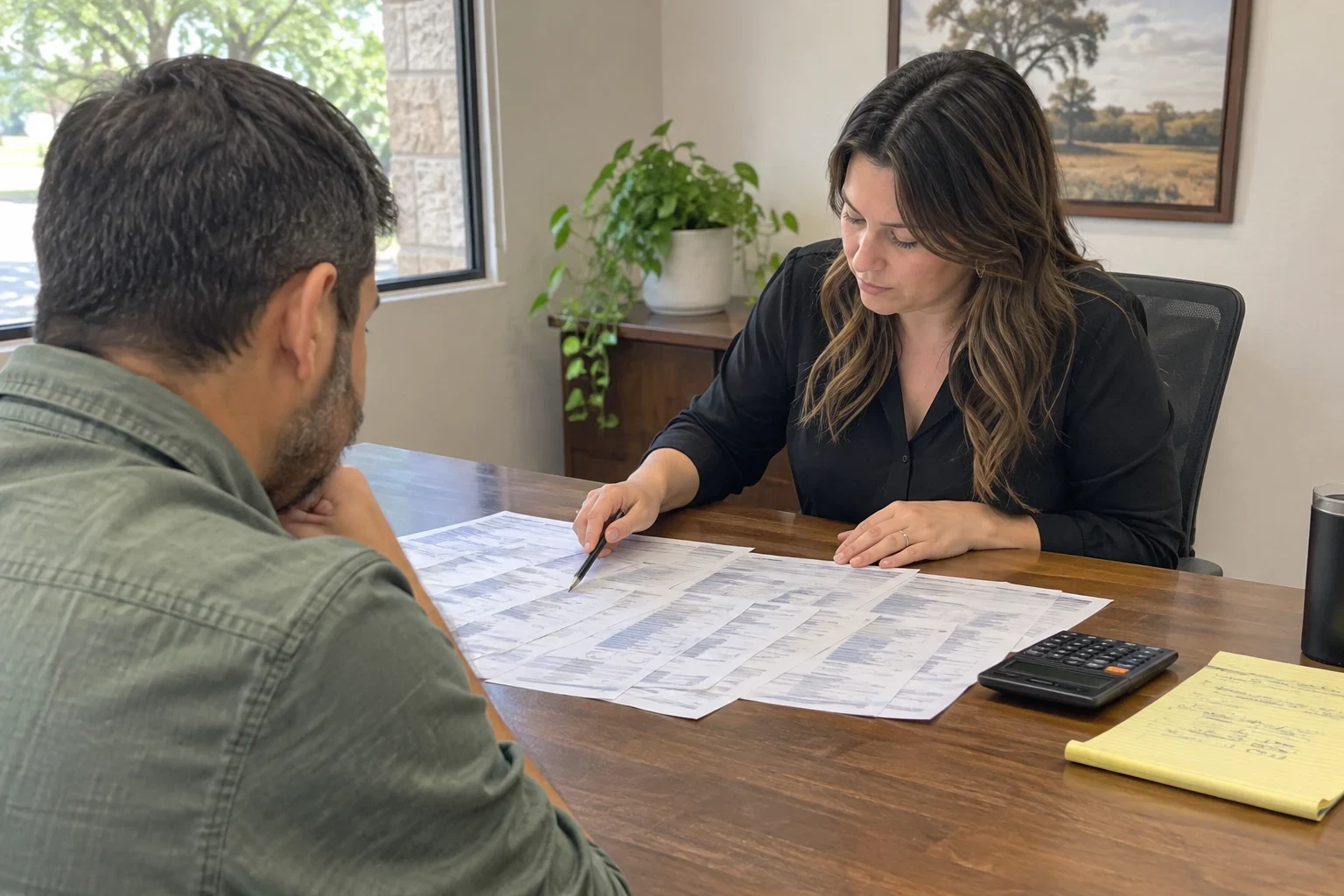
A home loan built around how self-employed people actually get paid
Conventional underwriting looks at the bottom line of your Schedule C or business return. That number is after depreciation, mileage, equipment and every other legitimate write-off, so a contractor or consultant who deposits plenty can still look underqualified on paper. A bank statement loan is a non-QM home loan that skips the returns and builds qualifying income from 12 or 24 months of personal or business bank statements.
The tradeoff is honest and worth knowing up front. Rates usually run higher than a conventional loan, and the down payment and cash reserve expectations are often larger. For many borrowers it is still the right call, and some refinance into a conventional loan later once two years of returns tell a stronger story. We will tell you which path fits, even when the answer is a different program like our Conventional Loans or FHA Loans.
What we handle on a bank statement loan
Deposit analysis
We total eligible deposits month by month and strip out what underwriting will not count: transfers between your own accounts, loan proceeds, refunds and one-time items. You see the same math the underwriter will see.
Expense factor review
Business statements are reduced by an expense factor to estimate profit. We compare the standard factor against a CPA-prepared expense letter or profit-and-loss statement, since a lower documented expense ratio can raise qualifying income.
Large deposit sourcing
Any deposit well above your normal pattern needs a paper trail, such as an invoice or contract. We flag these early so you are not hunting for documents a week before closing.
Personal or business statements
Some borrowers run everything through one personal account; others keep a clean business account. We check which set produces the stronger and more defensible income figure.
Hazard and flood coverage requirements
Every loan needs a hazard insurance binder before closing, and flood coverage if the property sits in a mapped flood zone. We explain what the lender requires, including how wind and hail deductibles are listed, so your agent quotes the right policy. We do not act as your agent or adjuster.

Signs a bank statement loan may fit you
- Your returns undersell your income
- Heavy write-offs lowered your taxes but also lowered the income a conventional underwriter will accept.
- You have under two years on returns
- A newer business may not have two full filed years yet, but it may have 12 months of steady deposits.
- Your income swings by season
- Builders, landscapers and event businesses often earn unevenly. Averaging 24 months of deposits can smooth out a slow winter.
- You were turned down for documentation
- A denial over tax-return income is not the same as a denial over credit or assets. It is worth a second look with statements.
- You are paid on 1099s from several clients
- Multiple payers can make income hard to document the traditional way, while deposits show the full picture in one place.
How the loan moves from first call to closing
- 1
Phone conversation
You tell us how your business is set up, how you are paid and what you want to buy or refinance. We give you rate quotes based on that profile and say which statements to gather.
- 2
Statement review
You send 12 or 24 months of statements. A loan officer runs the deposit analysis, notes any overdrafts or unusual deposits and walks you through the qualifying income, by phone, video or at our office.
- 3
Pre-qualification and application
With income calculated, we pull credit, confirm your down payment and reserves, and complete the loan application so you can make offers with a clear budget.
- 4
Appraisal, binder and underwriting
The appraisal is ordered, your insurance binder is collected and underwriting reviews the file. Questions usually concern specific deposits, which is why we source them early.
- 5
Closing
You review the Closing Disclosure at least three business days before signing, then sign with the title company. We explain each line before you get there.
What moves your rate and costs
Bank statement loans are priced on risk, so the same property can carry different terms for two borrowers. We break down every line of the estimate and show which factors you can still change before you lock.
- Down payment size
- More equity in the deal lowers the lender's risk. Moving to a larger down payment tier often improves the rate noticeably.
- Credit score
- Score tiers affect pricing more sharply on non-QM loans than on many conventional loans. Paying down revolving balances before we pull credit can help.
- 12 versus 24 months
- A 24-month lookback can be priced more favorably than 12 months, and it can also average in a weaker year. We run both when you have the history.
- Cash reserves
- Months of payments left in the bank after closing count in your favor. Thin reserves can raise pricing or limit loan size.
- Property type and use
- A primary residence prices differently than a second home or an investment property, and condos can carry their own requirements.
Bank statement loan questions
- Do I use personal or business bank statements?
- Either can work. Business statements usually have an expense factor applied, while personal statements are generally counted closer to full deposits if business income flows into them. We run your numbers both ways when you have both accounts.
- Will my tax returns be looked at at all?
- Generally the returns are not used to calculate income on this program. You may still sign a tax transcript authorization, and you will need to show the business exists, often with a CPA letter or business license.
- How large a down payment do I need?
- It is typically more than a conventional or FHA loan requires, and the exact amount depends on your credit score, loan size and property type. We give you the specific figure for your scenario on the phone.
- Can I refinance into a conventional loan later?
- Often, yes. Once two years of filed returns support the payment, a refinance into a conventional loan may lower your rate. We can review that with you when the time comes.
- Do overdrafts on my statements hurt?
- A few isolated overdrafts are usually explainable, but repeated ones can raise questions or affect eligibility. We spot them during review and help you write a short explanation if needed.
- What coverage does the lender require before closing?
- You need a hazard insurance policy in place by closing, plus flood coverage if the property is in a designated flood zone. We tell you the required coverage and deductible terms so your agent quotes correctly, but the policy itself comes from your carrier.
See what your deposits qualify you for
Have a rough idea of your monthly deposits and how your business is set up. We will talk through the numbers and give you rate quotes you can compare. We work with self-employed borrowers across San Marcos, Kyle, Buda and New Braunfels.